
Tell the Bees
3 hours ago
5 min read
Updated: 13 minutes ago
October 15, 2026
October is a moody month, and that's fine with me. It’s October’s right to threaten frost, and I’m never sorry to see the tomatoes go; weeks of picking will do that to you. But then October slips in an 80° day, and everyone is back in t-shirts. No problem there, either. With winter as the next stop, who wouldn't bask in all the warmth October has to offer?

The celosia in New Pond Field is putting on a fiery show right now, and I’m glad I decided to pilot the pick-your-own share after all. I got the idea last fall, when I was looking for ways to lighten my load, but a CSA survey shot it down pretty quick—members wanted the opportunity to pick in the fields, not the obligation. Fair enough. So I downsized the membership by 20% to achieve the desired workload. The pick-your-own idea, however, resurfaced last spring, when Instagram started feeding me a steady stream of flower content. By then I knew this would be our final season. I also knew how much flowers boost my spirits; if I can look up on a hot summer day and see buckwheat or sunflowers blooming in the distance, I can hoe another row. So I decided to plant a late-season succession of cut flowers in New Pond Field. When I advertised a new pick-your-own share to the public in May, shares sold out within days. When Dan questioned how much time I was spending in the New Pond flowers, I reminded him of the extra cash they were bringing in. But both of us knew I hadn't done it for the money. I did it as a going-away present to myself and everyone else.

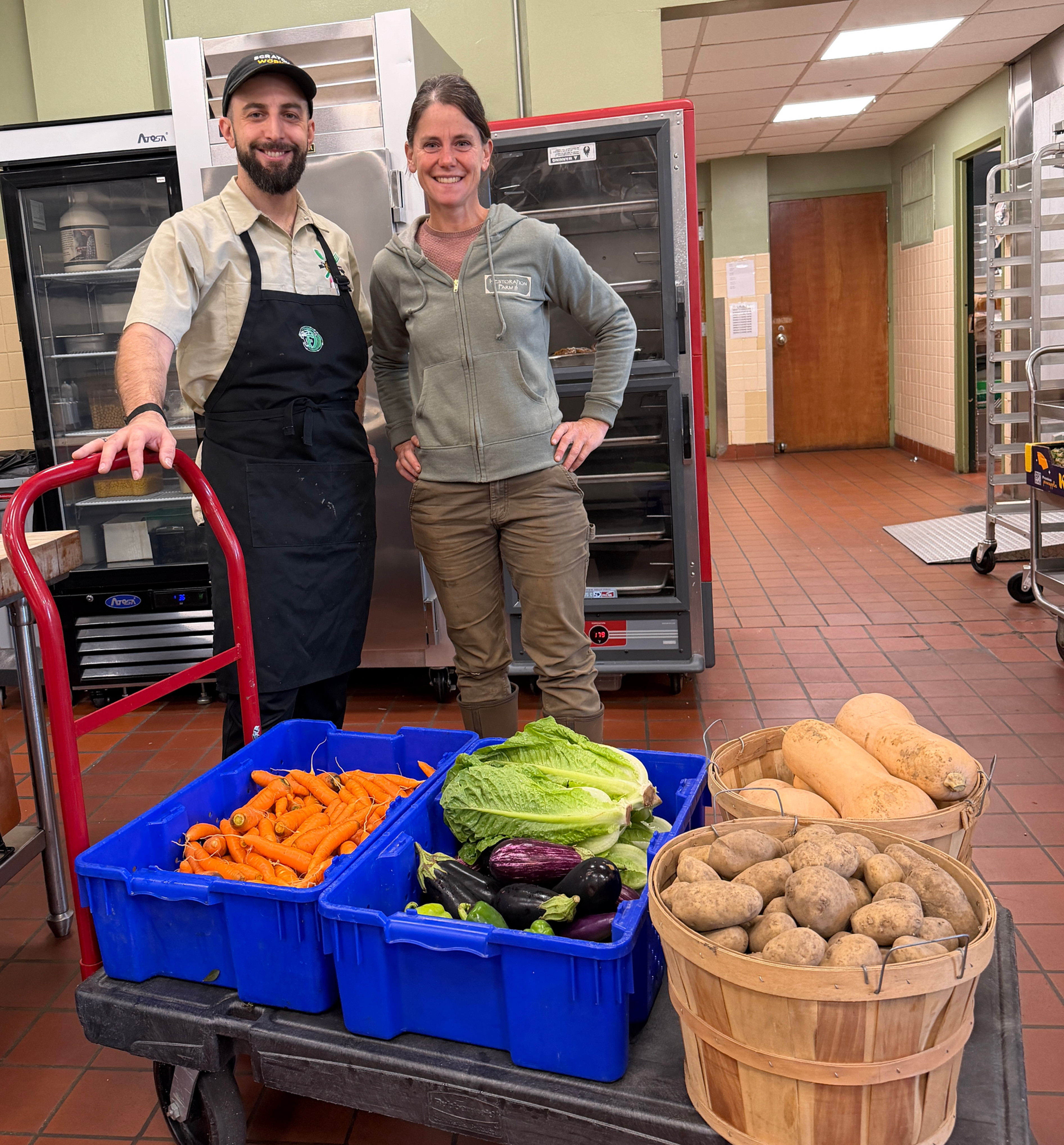
Two weeks ago, I checked a major item off my personal bucket list—delivering food to a local school district and getting a fair market value. Building a farm-to-school pipeline has been a long-standing dream of mine, but the wholesale math never made sense on our 5-acre farm. So a huge shout-out goes to CSA-member and farm-to-school advocate Lynette Frey, who connected me with Alessandro Palumbo, food service director at Farmingdale UFSD. Not only is Farmingdale a 5-minute drive from the farm, it participates in New York State’s 30% initiative, a cost-share program that reimburses school districts for sourcing at least 30% of their food products from NY farms. This partnership is the culmination of many efforts by many people, and I was downright giddy during my first delivery, which included carrots, potatoes, winter squash, peppers, and eggplant. Being able to meet the kitchen staff and see the food being prepared reassured me that our veggies will actually make it onto the students’ lunch trays. The following week, a box truck pulled up to the Tin House for lettuce, bok choy, leeks, fennel, and garlic. And if I had any misgivings about starting a new partnership just as I’m stepping away from the farm, they were outweighed by the excitement of demonstrating what’s possible while I still can.
Days after the Farmingdale delivery, I hosted two groups of A.P. environmental science students from Jericho High School. Reena Bhasin has been bringing her classes since 2014, and for the most part, I stick to the script. But this was my final opportunity to address a group of students as head grower of Restoration Farm, so I laid my cards on the table: I’m switching careers because I can no longer labor as hard as I used to. And the farm is shutting down because Nassau County is not even trying to replace me and Dan. And even if Nassau County did try to replace us, it’ll be slim pickins, because there are so few farmers in the pipeline. How did it get to this point? Because of policy failures, big and small. It’s a policy failure that experienced tenant farmers are leaving their farms. It’s a policy failure that a local government is turning its back its own thriving farm. And it’s a policy failure that there are so few farmers in the pipeline. Then I asked the students—What are YOU going to do about it? The fact that food is mundane, and that many of these students are bound for Ivy league institutions, was not a deterrent. If anything, it was an incentive. I wanted them to understand that I was placing the burden of fixing our nation's food policies squarely where it belongs—with bright young minds destined for bright careers. Having established what's at stake, I then led the way to the fields for the regular script of science and habañero-eating contests.


The PYO share ended two weeks ago. Now we’re down to the last round of regular CSA pickups. From the moment we sold our first share in August of 2007, the wheel of the CSA has been in a constant state of motion. Members reserve their shares in the fall, and with their money, Dan and I lay the foundation for harvests half a year away. Then June arrives, and at the appointed time, like clockwork, members return to the Tin House to load up. For 20 years, this has been the foundation of our business. Even when there were no crops in the field, Dan and I always operated with a keen sense of what we owed. At times the pressure to deliver felt crushing, but as one CSA member recently said, Caroline, we’re your supporters, not your debtors. And she was right. No matter the weather, traffic, or political landscape, for 20 years, CSA members have greeted us faithfully every Tuesday and Saturday, June through October, offering both a market and gratitude for what we grow. So I’m bracing for sadness to accompany relief when the CSA wheel finally grinds to a halt.


How do we celebrate something shouldn’t end? How do we mourn something that hasn’t died? We can party in the field, and talk and hug and cry in the Tin House, but to me it still feels as though something is missing. There is no road map, or ritual that I know of, to guide us through this loss of farm and community.
Well, there may not be a road map, but just the other day, Maryellen reminded me of a ritual that might help fill the gap. She asked if I would invite people to help her “tell the bees,” an old tradition in which beekeepers share important news—births, deaths, marriages, departures, returns— with their hives. I’d never heard of this ritual when our previous beekeeper, Don Peterson, passed in 2022, but local beekeepers quickly brought me up to speed. Following their instruction, I visited the hives by myself and told the bees that Don was gone. I also reassured them that a new beekeeper would take his place. The simple act of telling was, I found, as comforting as Don’s death was unexpected. It was a focal point—a repository—for my sadness, and a way to move forward. So I think Maryellen, Don’s successor, hit the nail on the head to suggest that anyone in need of closure go tell it to the bees. You can visit them in the field, or write a note for us to pass along. Like any ritual, you can put your own spin on it. The bees will understand.

If there’s one thing I’d tell the bees, it’s that I am, despite outward appearances, angry. I’m angry Dan and I have to leave, I’m angry Nassau County is doing nothing about it, and I’m angry there aren’t more young farmers jockeying to replace us. I bury my anger at the Tin House because I don’t want to get off-track and accidentally charge someone $899 for butternut, but even if people don’t see it, the anger is there. That said, I’m also trying to put my anger to good use. Specifically, to launch a second career as a teacher. Anger isn’t my only motivator—I wanted to teach long before I became a farmer—but it is a powerful one. So I will tell the bees about it, and leave my anger with them. And then I will move forward.
Thanks for reading
—Caroline


Comments